
AED Pad Placement: Complete Guide for All Ages
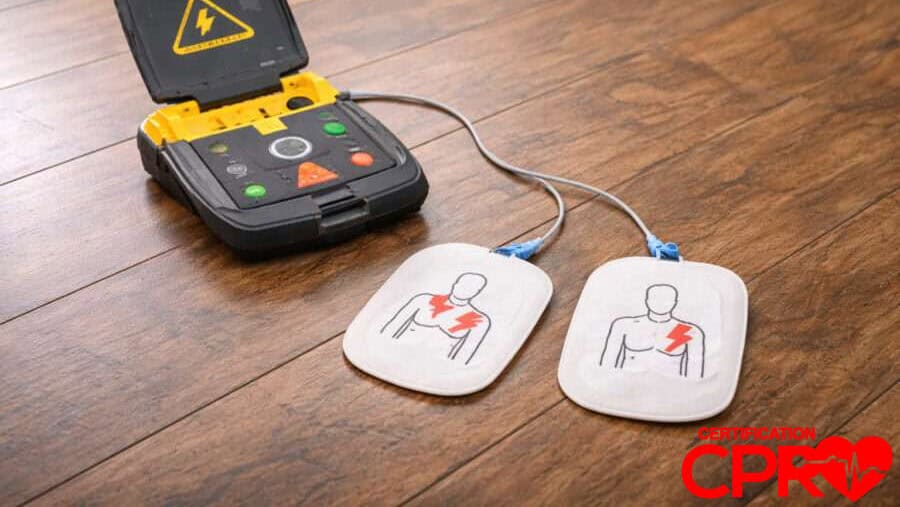
AED pad placement sounds like a small detail until you are the person holding the pads while someone is down. In that moment, people start second-guessing themselves fast. One pad goes where? What if the person is a child? What if the pads look too big? What if you get it wrong?
AEDs are designed to guide you, and the pad diagrams do most of the work. Still, knowing the basic placement before the emergency means less time staring at the chest and more time moving through the response with some confidence.
AED pad placement becomes real in the same places where Tallahassee crowds gather: FSU athletics, Leon County school events, churches, fitness centers, state offices, and venues near the Donald L. Tucker Civic Center.
Pad placement affects how well the AED can analyze the rhythm and deliver a shock if one is advised. When the pads are placed correctly and the rest of the CPR-AED sequence keeps moving, the response gets a lot smoother and there is less wasted time at exactly the point where hesitation hurts most.
Upcoming CPR Class Dates and Times
If you want that sequence to feel familiar before you need it, the AHA BLS CPR class gives students hands-on practice with AED use instead of leaving it as a guess-in-the-moment skill.
AED Pad Placement for Adults
For an adult, the usual pad placement is simple. One pad goes on the upper right side of the bare chest, just below the collarbone. The other goes on the lower left side of the chest, a little below the armpit.
That setup lets the electrical current pass through the heart the way the AED expects. You do not need to invent a custom layout or remember medical language under stress. Follow the diagram on the pads and place them firmly on dry bare skin.
Expose the chest before applying the pads. Clothing gets in the way, and wet skin should be dried quickly first. If the person has a lot of chest hair and the pad will not stick well, that can affect placement too. These are adjustments, not reasons to stop the response.
For adults, keep it simple: upper right chest, lower left chest. Press the pads down well, let the AED analyze, and keep following the prompts.
AED Pad Placement for Children (Ages 1–8)
For children ages 1 to 8, AED pad placement depends on the size of the child and the type of pads available. If the AED has child pads or a child mode, use those and follow the device instructions.
In many cases, the placement still follows the pad diagrams provided with the AED. If both pads fit on the chest without touching, place them as directed on the front of the chest. If the child’s chest is too small for that setup and the pads would touch, the setup may need to shift to front-and-back positioning if the AED instructions call for it.
A smaller chest can make the whole setup look less familiar at first. Slow down for a second, check the diagrams, and make sure the pads do not overlap. The right answer is not to force the usual adult layout onto a body that cannot fit it safely.
Familiarity is what helps most. If you have practiced the CPR-AED sequence before, you are much more likely to trust the diagrams and keep moving instead of freezing on pad size.
AED Pad Placement for Infants (Under 1 Year)
Infant AED pad placement is the part that makes a lot of people nervous, mostly because the body is so small. The same basic rule still applies: follow the AED instructions and use infant- or child-appropriate equipment if it is available.
When the infant is too small for both pads to sit safely on the chest without touching, a front-and-back setup is often used. One pad goes on the center of the chest and the other goes on the back. That helps avoid overlap and still allows the AED to work as intended.
This is not something people should try to improvise from memory if the pad diagrams are right in front of them. The diagrams and device prompts are there to help. Your job is to place the pads where the AED shows, make sure they are not touching, and continue with the response.
Infant emergencies feel more intimidating on paper than after you have worked through the steps in class.
What If Pads Touch or Overlap?
If AED pads touch or overlap, that needs to be fixed before the AED analyzes or delivers a shock. The pads need enough separation to work correctly.
This comes up most often with children and infants because the body is smaller. When the chest is too small for the usual front placement, the answer is not to force the pads in anyway. The answer is to use the placement the AED instructions show for a smaller body, which may mean front-and-back positioning.
Panicking over perfect placement wastes time at exactly the wrong moment. The job is to get the pads into the correct non-touching positions shown by the device and keep the response moving.
If you want the full sequence around pad placement, shock prompts, and when to clear the patient, the step-by-step AED guide covers how the steps fit together once the pads are on.
Special Situations
Medication patches. Remove the patch and wipe the skin before placing the pad. The medication patch can interfere with good pad contact and can cause burns.
Pacemakers and implanted defibrillators. You can still use the AED. If you see or feel the device under the skin, place the pad slightly to the side instead of directly over it.
Thick chest hair. Chest hair usually is not a problem, but if it prevents the pad from sticking, quickly shave the pad site if a razor is available.
Wet skin or wet ground. Move the person out of standing water, wipe the chest dry, and keep the AED itself as dry as possible. Do not delay defibrillation longer than necessary.
Upcoming CPR Class Dates and Times
Pregnancy. It is safe to use an AED on a pregnant person. Use the adult pads and do not hesitate.
Jewelry and piercings. You do not need to remove them, but do not place the pad directly over metal jewelry or a piercing. Adjust placement slightly if needed.