
How to Stop Bleeding: First Aid
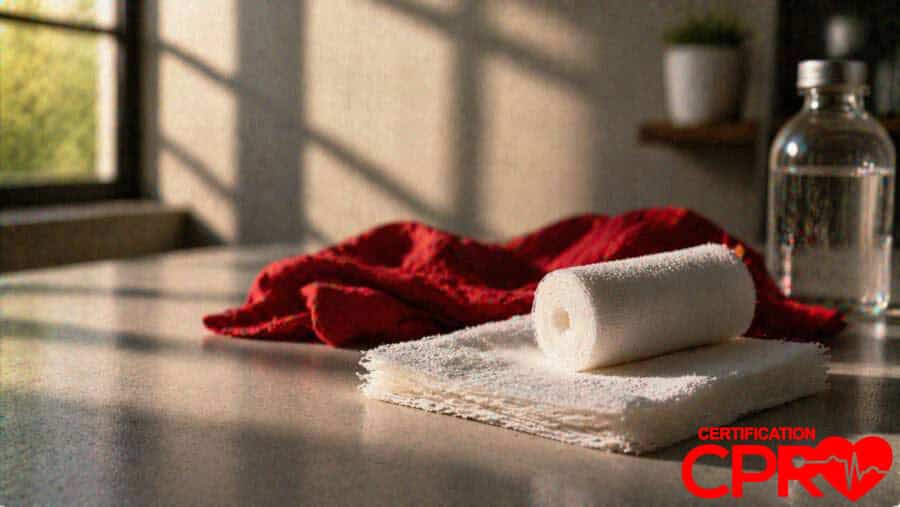
If someone is bleeding in front of you, the first question is not whether you remember every first-aid term you have ever heard. The first question is whether you can control the bleeding quickly enough to keep the situation from getting worse. In a lot of everyday cases, you can.
Stopping bleeding still starts with direct pressure, and direct pressure handles most of the bleeding people are likely to see at home, at work, or on a sports sideline. But a small cut, a nosebleed, and a serious traumatic bleed are not the same problem. The response changes with the amount of blood loss, the location of the wound, and how well the bleeding responds once pressure is applied.
Bleeding control in Tallahassee may begin in a school hallway, restaurant kitchen, campus lab, park field, construction area, or office break room before EMS reaches the scene.
The trick is not to overcomplicate the first few minutes. You start with pressure, use clean materials if you have them, and recognize when the situation has moved past basic first aid and into emergency care.
Upcoming CPR Class Dates and Times
Start With Direct Pressure
Direct pressure is the first move for most bleeding. Use a clean cloth, gauze, or bandage if you have it, place it over the wound, and press firmly.
What trips people up is impatience. Pressure needs time to work. If you keep lifting the dressing every few seconds to see how it looks, you break the pressure cycle and make the bleeding harder to control.
If blood soaks through, keep pressure on and add fresh material on top. Do not peel the soaked dressing away just to replace it. That can disturb early clotting and start the bleeding all over again.
Raise the Concern Level for Heavy Bleeding
Heavy bleeding changes the urgency of everything. If the bleeding is severe, will not stop, or follows a major injury, you are no longer dealing with a routine wound-care problem. You may be looking at an emergency that needs 911 right away.
This is the point where you stop treating the wound like a normal cut. Large blood loss, dressings that keep soaking through, or a scene involving a crash, machinery, a deep puncture, or a serious fall should raise your concern level fast.
Call 911 when the bleeding looks severe or the person is starting to look pale, weak, confused, faint, or hard to wake. Those signs matter just as much as the wound itself because they tell you the whole emergency may be getting bigger than basic first aid can safely manage.
Tourniquets, Wound Packing, Nosebleeds, and Embedded Objects
Direct pressure is still the starting point, but a few bleeding problems need more than that. Knowing the difference between “keep pressing” and “this calls for a different tool” is where training pays off.
- Tourniquets: Use a tourniquet for life-threatening bleeding from an arm or leg when direct pressure is not stopping it. Place it 2 to 3 inches above the wound, avoid joints, tighten until the bleeding stops, and do not loosen it once it is on.
- Wound packing and hemostatic gauze: For deep wounds in places like the groin, shoulder, neck, or armpit where a tourniquet will not work, pack the wound firmly with gauze or hemostatic gauze if available, then hold hard direct pressure.
- Nosebleeds: Sit upright, lean slightly forward, and pinch the soft part of the nose continuously for 10 to 15 minutes. Do not tilt the head back. If the bleeding is severe or keeps going, get emergency care.
- Embedded objects: Do not pull the object out. Apply pressure around it, build dressings around it to stabilize it, and get medical care.
Use Gloves if You Have Them
Gloves help protect the responder from blood contact. If they are nearby, put them on before helping.
If gloves are not nearby and the bleeding is serious, the need to help may still come first. That does not make protection unimportant. It just means real emergencies do not always wait for perfect setup. Once the immediate crisis is under control, handwashing and proper cleanup matter.
This is one reason first aid kits should stay stocked with gloves instead of just bandages and tape. First aid kits are much more useful when the protective basics are already in the box instead of somewhere else in the building.
Watch the Person, Not Just the Wound
Bleeding control is about more than the wound itself. The person’s overall condition matters just as much.
If they look pale, weak, confused, faint, or hard to wake, the problem may be getting more serious. If the bleeding follows a head injury, a deep wound, broken glass, a machinery accident, or a major fall, the visible wound may be only one part of what is happening.
Good first aid stays simple, but it also stays alert. Keep one eye on the wound and one eye on whether the whole situation is changing in front of you.
Know When Bleeding Is No Longer a Basic First Aid Problem
Basic first aid works well for many minor cuts and smaller injuries. It is not enough for severe trauma, major blood loss, or a patient whose condition is sliding in the wrong direction.
Upcoming CPR Class Dates and Times
Bleeding that will not stop, blood loss tied to a major accident, or bleeding along with signs of shock needs more than home care. That needs emergency care.
A good response is usually not a complicated one. It is steady pressure, a calm head, and the willingness to call for help early instead of waiting for the scene to prove how bad it is going to get.